Transit.
Formats types and sizes

TransitAdvertisingin the U.S.
Get your business moving in the right direction.
Transit advertising in the United States offers a dynamic and impactful way to reach consumers in urban and suburban environments. From full bus wraps to interior cards on public transportation, advertisers can engage a diverse audience of commuters, tourists, and pedestrians.
Contact us here to discover your options.
Features
Large format advertising on public buses in over 210 markets nationwide and 10 in Canada
Variety of buses: commuter, articulated, electric, shuttles
Commuters unable to alternate with things when commuting catch glimpse of transit advertising, including in traffic, on street, at intersection
Creative full graphic transforming your identities across different sized buses
Transit format is a powerful branding medium and delivers on CPM's that direct all other out of home media
Bus Wrap
? BUS MINIMUM
Minimum panel buy: daily
Buses: Varies
Buses and Trains
Markets: 4 weeks
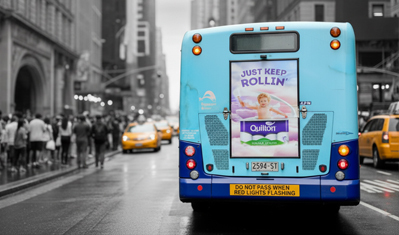
The industry's most familiar painted or vinyl wrapping format. A full wrap covers 100% of the exterior bus, including windows. Our nationwide bus advertising network has 210+ markets and 150,000+ buses.
Bus wraps are available on buses, Certified bus on CDL. Minimum of 4 weeks. Contact us for 1-888-178-8881 to find out pricing for your specific area.
King Kong
? BUS MINIMUM
Minimum panel buy: daily
Buses: Varies
Buses and Trains
Markets: 4 weeks
Showcase billboard king billboard impacts with an extra wide poster on the driver's side of transit vehicles. Contact us for 1-888-178-8881 to find out pricing for your specific area.

Full Back
? BUS MINIMUM
Minimum panel buy: daily
Buses and Trains
Markets: 4 weeks
The billboard is a full or a covering large format vinyl that covers the entire rear of the bus. The ads are available on buses. Certified bus on CDL. Minimum of 4 weeks. Contact us for 1-888-178-8881 to find out pricing for your specific area.
Bus Tail
? BUS MINIMUM
Minimum panel buy: daily
Buses and Trains
Markets: 4 weeks
The billboard is a full or a covering large format vinyl that covers the lower half of the rear of the bus. The ads are available on buses. Certified bus on CDL. Minimum of 4 weeks. Contact us for 1-888-178-8881 to find out pricing for your specific area.
Bus King Ultra
? BUS MINIMUM
Minimum panel buy: daily
Buses and Trains
Markets: 4 weeks
The billboard is a full or a covering large format vinyl that covers the entire curb side of the bus. The ads are available on buses. Certified bus on CDL. Minimum of 4 weeks. Contact us for 1-888-178-8881 to find out pricing for your specific area.
Bus King
? BUS MINIMUM
National scale market
Minimum panel buy: daily
Buses and Trains
Markets: 4 weeks
The billboard is a full or a covering large format vinyl that covers the curb side of the bus. The ads are available on buses. Certified bus on CDL. Minimum of 4 weeks. Contact us for 1-888-178-8881 to find out pricing for your specific area.
Frequently asked questions.
"Outdoor" or "Out-of-Home" (OOH) advertising is simply any advertising that reaches people when they are outside of their homes. It includes everything from giant roadside billboards and ads on buses to screens in airports, train stations, and elevators.
Static Billboards: A single, printed ad for your whole campaign. Simple and effective. Digital Billboards (DOOH): Multiple ads on a rotating LED screen. We make it easy to upload and change your ad anytime.
Yes. We can arrange to have your vinyl saved after your campaign, making your next launch even simpler and more affordable.
Train and subway advertising places your message where millions of commuters travel every day. Posters, wraps and digital screens inside stations and carriages keep your brand visible during daily routines. At Billboards America we help brands reach urban audiences through transit networks across the United States.
Campaign costs depend on the city, format and duration. Typical price ranges: Station posters 200 to 800 dollars per month Train interior cards 500 to 1,500 dollars per month Full wraps 5,000 to 20,000 dollars per month Digital screens 1,000 dollars or more per month Billboards America negotiates directly with transit operators so you get transparent, competitive rates with nationwide coverage.
New York subway advertising starts around 500 dollars a month for interior cards and can exceed 10,000 dollars for full car or station campaigns. It’s the country’s highest-traffic transit system, giving unrivalled exposure. Billboards America manages creative, sizing and approvals so brands can access NYC inventory quickly and easily.
Yes. Subway advertising is one of the highest-impact forms of out-of-home media. Commuters see the same ads multiple times a week, building strong recall and credibility. Our clients use it to launch products, promote events and build awareness in dense urban markets.
Billboards America provides every format available in U.S. networks, including: Full train wraps, interior cards, station wall posters, digital screens and floor decals. Each format is designed to maximise visibility depending on your budget and objectives.
Provide your target cities, campaign dates and creative assets. Our team sources live inventory, confirms pricing and manages production through to installation. Billboards America simplifies what’s normally a complex process across multiple transit authorities.
Subway advertising targets underground metro systems such as New York, Chicago or Boston, while train advertising covers above-ground and commuter rail networks. Billboards America runs campaigns across both, giving advertisers flexibility to reach local or regional audiences.
Yes. Station advertising includes wall posters, concourse displays, entrance panels and digital screens near ticketing areas. These formats reach both commuters and pedestrians and are popular for retail and tourism campaigns.
Digital subway ads use animated or video creative on LED screens in stations and tunnels. They can rotate multiple messages, update instantly and operate during peak travel periods. Billboards America offers digital inventory in all major networks.
Transit advertising delivers one of the lowest costs per impression in out-of-home media. Even in large systems like New York or Chicago, CPMs often sit below two dollars. For the exposure and repetition achieved, subway advertising remains exceptional value.
New York’s network reaches more than three million riders a day. Billboards America campaigns here achieve mass visibility among residents, professionals and visitors. For national brands, NYC subway placements often anchor larger U.S. awareness campaigns.
Yes. Billboards America coordinates multi-city campaigns across train, subway and bus networks. You can run one creative concept nationally and track performance across different markets from a single campaign plan.
Transit operators restrict political, explicit or misleading content, and some limit alcohol or tobacco promotions. Billboards America ensures all artwork meets network approval before production to keep timelines on track.
Billboards America gives you direct access to the country’s largest transit networks without agency mark-ups or complexity. Our platform covers every major U.S. market and our team handles approvals, sizing and creative so you can focus on results.
Bus advertising is the placement of visual ads on buses that travel throughout a city or region. Ads can appear on the side, back, or even wrap around the entire bus, creating a moving billboard that reaches drivers, commuters, and pedestrians daily. At Billboards America, we make it easy to launch a bus campaign in any U.S. city with transparent pricing and fast turnaround.
Bus advertising typically costs between USD 250 and USD 6,000 per month, depending on location, coverage, and ad size. Average guide: Rear or side panels: from USD 250–800 per month Full bus wraps: from USD 2,000–6,000 per month Smaller regional buses: often under USD 500 per month Request a quote through Billboards America and compare costs instantly by city or network.
Costs vary by market, but local bus advertising is one of the most affordable ways to reach mass audiences. When you advertise on a bus, your message travels across major commuter routes, creating repeated impressions for a fixed monthly price. Book through Billboards America to access national bus networks with one simple platform.
Yes — bus advertising works extremely well for both local and national campaigns. It provides mobile exposure across thousands of daily commuters and drivers, building familiarity and recall. Bus ads are proven to: Boost brand awareness within 7 days Reach audiences multiple times per week Support both product launches and community messaging Many of our advertisers combine bus and billboard placements for city-wide coverage.
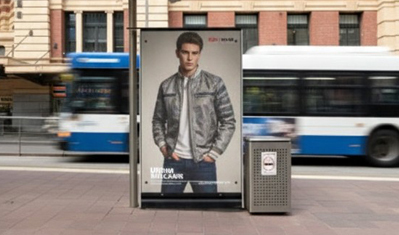
Bus shelter advertising places your message inside or beside bus shelters, usually at eye level and often illuminated at night. It targets both waiting passengers and passing traffic — with dwell times averaging 20 to 60 seconds per stop. It’s one of the most cost-effective static formats available through Billboards America.
Bus shelter advertising costs between USD 150 and USD 800 per month depending on the location and traffic volume. Suburban shelters: from USD 150–300 per month Downtown or CBD shelters: from USD 400–800 per month Digital bus shelters: from USD 1,000 + per month Shelter ads offer long exposure for a low price, making them ideal for small businesses and community programs.
Bus stop advertising includes printed or digital posters displayed at the actual stops and shelters where commuters wait. These panels are highly visible and offer strong local reach — particularly in walkable neighbourhoods and downtown corridors.
Bus stop advertising starts at about USD 150 per month for static posters, with digital panels costing around USD 800 + per month. Your total cost depends on: Stop location (urban vs suburban) Panel type (poster vs digital) Duration of booking Get an instant estimate at Billboards America makes outdoor advertising simple. Search, compare, and book billboards online in minutes with fast approvals and clear pricing. — you can search by city and ad format.
Bus stop advertising is extremely effective for reaching local foot traffic and drivers near intersections. People waiting for buses spend several minutes in front of your message — creating long dwell time and better recall than drive-by ads alone. It’s ideal for promoting: Retail stores and restaurants Local events and festivals Tourism and government campaigns
With Billboards America, it’s simple: Enter your target city or ZIP code. Browse available bus shelter or stop locations. Choose your preferred ad size and dates. Upload your artwork or request design help. Approve and go live — your ad stays visible 24/7. Our platform connects you with verified media owners nationwide.
Full bus wraps: maximum visibility, complete coverage Side panels (King/Queen): ideal for brand exposure Rear panels: targeted at drivers in traffic Interior cards: messaging to onboard passengers Bus shelters: static or digital panels at stops Each format can be booked directly through Billboards America.
Transit advertising includes all mobile and public transport media — buses, trains, trams, taxis, and shelters. It’s designed to reach urban commuters throughout their journey, providing frequency and reach unmatched by online ads. Transit campaigns can easily be combined with billboard placements to cover every touchpoint in your customer’s daily route.
Mass reach: thousands of daily impressions Affordability: low cost per thousand (CPM) Repetition: constant route exposure Local relevance: ideal for community-based businesses Visual impact: creative space that demands attention Bus advertising keeps your brand moving 7 days a week.
Yes — the most effective campaigns combine billboards and bus advertising to dominate both fixed and moving spaces. Billboards reach drivers on highways, while buses extend your presence through local streets, suburbs, and CBDs. You can bundle both directly on Billboards America makes outdoor advertising simple. Search, compare, and book billboards online in minutes with fast approvals and clear pricing. for simplified booking and savings.
You can book bus, bus shelter, or bus stop advertising directly through Billboards America. Choose your market, upload your creative, and get connected with media owners instantly. Start your campaign today and get your brand moving.
Search our map for digital bulletin locations. Request a proposal for the boards you want. We’ll book the space, schedule your campaign, and handle the upload.
Look for static bulletins on our map. Request a proposal for the sites you’re interested in. We’ll manage printing, install, and send you proof when it’s live.
Browse poster boards on our map. Request a proposal for your preferred neighbourhoods. We’ll organise the booking and handle the rest.
Search for spectacular billboard sites on our map. Request a proposal. We’ll confirm availability and coordinate all production and installation.
Check our map for wallscape and mural opportunities. Request a proposal. We’ll book the site and manage the install from start to finish.
Find bus shelters in your area on the map. Request a proposal. We’ll confirm availability and take care of booking and installation.
Search the map for benches, kiosks, or other street furniture formats. Request a proposal. We’ll book the spots and manage production.
Check our map for kiosks and phone booths. Request a proposal. We’ll arrange the booking and make sure your ad is installed.
Select bus routes or wraps from the map. Request a proposal. We’ll handle printing, wrapping, and confirming schedules with the fleet.
Search for bus interior formats on our map. Request a proposal. We’ll arrange interior cards, panels, or digital screens.
Search for train or subway formats on our map. Request a proposal. We’ll book carriage panels, wraps, or station posters.
Check the map for transit shelter locations. Request a proposal. We’ll confirm your booking and manage the display.
Find large format digital screens on the map. Request a proposal. We’ll book the placement and upload your creative.
Look for static airport billboards on our map. Request a proposal. We’ll handle the booking and printing.
Search for baggage claim displays on our map. Request a proposal. We’ll book and coordinate the placement.
Find concourse and walkway banners on the map. Request a proposal. We’ll handle the production and installation.
Check the map for jet bridge and gate options. Request a proposal. We’ll book and coordinate with the airport.
Find security tray and checkpoint branding on the map. Request a proposal. We’ll manage the logistics and approvals.
Look for retail and duty-free activations on the map. Request a proposal. We’ll organise the placements and work with airport retail partners.
Search for decal and cling options on the map. Request a proposal. We’ll handle printing and install.
Check the map for shuttle and car park ad spots. Request a proposal. We’ll manage the wrap, install, and booking.
We don’t have every single location on our map yet. If you can’t find what you need, get in touch and we’ll source it for you anywhere in the country.
Airport advertising includes digital displays, backlit dioramas, baggage claim ads, terminal banners, jet bridge advertising, wall wraps, floor graphics, and sponsored charging stations. Premium placements in security lines and gate areas capture extended dwell time from travelers.
Airport advertising costs vary significantly by airport size, location within the terminal, and format. Smaller regional airports may start at $1,000 to $3,000 per month, while premium placements in major hub airports can range from $10,000 to $100,000 or more per month.
Airport audiences tend to skew toward higher income, frequent travelers, and business professionals. This makes airport advertising ideal for luxury brands, business services, financial products, travel and hospitality companies, and technology brands targeting affluent decision-makers.
Airport advertising benefits from extended dwell time as travelers wait for flights, creating opportunities for deeper message engagement. The captive audience in terminals, combined with the premium environment and affluent demographics, delivers strong brand recall and perception benefits.
Yes, airport advertising can be strategically placed near specific gates or terminals to reach travelers heading to particular destinations. This allows brands to target business travelers on certain routes or leisure travelers heading to specific vacation destinations.
Static billboards display a single printed advertisement for the duration of your campaign, typically four weeks or longer. Digital billboards rotate multiple advertisements in a loop, with your message appearing for several seconds at a time throughout the day. Static billboards offer continuous visibility, while digital billboards provide flexibility to update messaging quickly and target different times of day.
Both formats effectively build brand awareness when placed strategically. Static billboards provide constant presence, reinforcing your message every time someone passes. Digital billboards offer dynamic visuals that can capture attention with motion and brightness. For sustained awareness campaigns, static billboards often deliver better value, while digital billboards excel for time-sensitive promotions or when you want to test multiple messages.
Digital billboards typically rotate between six to eight advertisers, with each ad displaying for eight to ten seconds. This means your advertisement appears approximately six to eight times per minute. Over the course of a day, your message receives hundreds of displays, ensuring repeated exposure to commuters and passersby traveling the same routes.
Most digital billboards display static images rather than full video due to traffic safety regulations. However, subtle motion elements like fading transitions or simple animations are often permitted. The key is ensuring your message remains readable and does not distract drivers. We can advise on what motion effects are allowed for specific billboard locations.
Yes, digital billboards are LED-illuminated and highly visible around the clock. They automatically adjust brightness based on ambient light conditions, appearing vibrant during daylight hours while dimming appropriately at night to avoid glare. This 24/7 visibility makes digital billboards particularly effective for reaching evening commuters and nighttime audiences.
Transit advertising includes bus wraps (full and partial), interior bus cards, transit shelter posters, subway and metro station ads, train wraps, and taxi or rideshare advertising. Each format offers different reach and visibility depending on your target audience and campaign goals.
Costs vary by format and market. Interior bus cards can start around $500 per month, while full bus wraps in major markets range from $3,000 to $15,000 or more per month. Transit shelter ads typically range from $500 to $2,500 per month depending on location and traffic.
Most transit advertising campaigns have a minimum of four weeks. Many advertisers run campaigns for 8 to 12 weeks or longer to maximize frequency and brand recall among daily commuters who see the same routes repeatedly.
Yes, transit advertising allows geographic targeting by selecting specific bus routes, train lines, or station locations that align with your target audience demographics. This precision makes transit ads effective for reaching specific neighborhoods or commuter corridors.
Transit advertising effectiveness can be measured through brand awareness surveys, website traffic spikes, promo code redemptions, foot traffic analysis, and transit authority ridership data for impression estimates. QR codes and unique URLs help track direct response.
Use bold colour and simple copy. Because viewers are close, you can include product imagery, QR codes, or short URLs. Keep text under 10 words for instant recognition.
Campaigns typically run in 2–4 week cycles. Many advertisers maintain continuous presence throughout the year in key suburbs for sustained local recognition.
Buses naturally travel through dense, high-traffic corridors — perfect for campaigns needing mobile reach across multiple neighbourhoods. Ideal for citywide awareness or event promotion.
It performs strongest in retail corridors, CBD footpaths, public transport hubs, and near schools or cafés — anywhere people pause or wait. Proximity and dwell time drive impact.
Use large text, bold contrast, and horizontal layouts. Focus messaging near eye level for traffic and pedestrians. Avoid fine detail; motion limits readability time to about 3 seconds.
Clean, aspirational visuals and brand-led messaging. Think “next-level” campaigns — focus on brand experience over discounts. Use high-quality photography and minimal copy.
Use simple, impactful imagery and short copy. In stations, you can use more detailed storytelling since dwell times are longer. Digital transit screens can run dynamic creative such as countdowns or location-based updates.
Street furniture includes bus shelters, benches, kiosks, phone booths, and other small-format displays seen at eye level in public spaces. It’s ideal for local, pedestrian-heavy environments such as shopping precincts or high footfall intersections.
Airports offer unmatched attention and premium perception. Travellers are relaxed, aspirational, and receptive — ideal for luxury, finance, and tech brands.
In major metro systems where commuters have predictable travel habits and longer dwell times — platforms, escalators, and entry concourses all provide high engagement.
Minimum of 4 weeks, often extended to 8–12 weeks for citywide rotation. The longer it runs, the more geographic reach achieved.
Common formats include full-body wraps, king and queen panels (side ads), tail ads, and interior panels. Each offers different cost and visibility levels.
Minimum 2–4 weeks for awareness; 8–12 weeks recommended for habitual commuter recognition. Frequency builds familiarity over repeated journeys.
Airport media includes digital screens, lightboxes, and wall wraps in terminals and baggage areas. It targets business travellers and affluent audiences with long dwell times.
Costs vary by city and visibility. Smaller suburban shelters may start around USD 200–400 per week; prime CBD or transport hubs can exceed USD 1,000 weekly per panel.
Transit includes ads in train stations, subways, trams, ferries, and airport terminals. It reaches commuters in enclosed, high-dwell environments with strong repeat exposure.
A bulletin-sized LED screen supporting multiple advertisers in rotation (6–10 sec per loop). “Digital Bulletins are great for time-sensitive campaigns.”
Oversized or custom-built board in premium locations, often with lighting or 3D elements. “Spectaculars create big-brand impact in high-visibility areas.”
Smaller billboard (≈ 10′×22′ or 10′6″×36′) for urban coverage. “Posters help reach neighbourhood audiences affordably.”
Digital version of a poster allowing short-term scheduling and dayparting. “A Digital Poster can update by time of day or promotion.”
The largest standard billboard format (≈ 14′×48′) on major highways, designed for long-term visibility. “A Bulletin is perfect for sustained brand awareness on highways.”
Screens or panels inside airports targeting affluent travellers. “Airport media reaches decision-makers in premium environments.”
Billboards remain the dominant OOH format. According to OAAA, 74.5% of Q1 2025 OOH revenues came from large-format billboard ads. While digital OOH continues to grow (36% of Q2 2025 sales, up 9.2% year-over-year), traditional large-format billboards continue to generate the majority of industry revenue.