Rail.
Formats types and sizes

Rail and StationAdvertising.
Rail Platform and Station Advertising in the U.S.
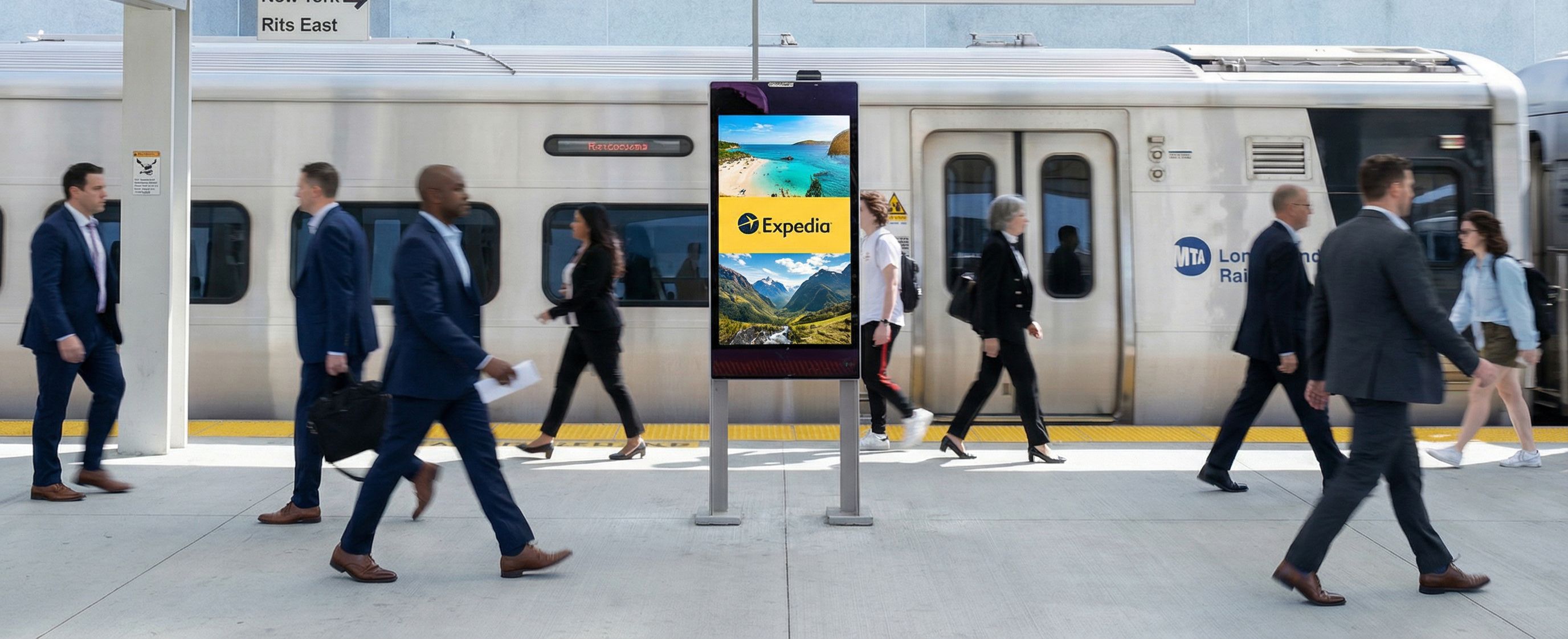
Rail and Platform Advertising, also known as Rail Media, rail billboards, platform advertising, and train station advertising refers to a wide range of outdoor advertising (OOH) formats placed throughout commuter rail networks.
These formats appear in: Train stations, Platforms, Concourse areas, Walkways, Stairways and escalators, Trackside billboards, Rail corridors, Entry and exit points.
Rail environments deliver incredibly strong visibility because commuters spend extended periods in stations and on platforms, creating high dwell time and repeated daily exposure. With millions of Americans relying on rail systems daily, from metropolitan subways to commuter trains, this medium provides unparalleled opportunities for brand exposure.
Features
High Dwell Time: Commuters often spend significant time on platforms and trains, increasing ad visibility.
Captive Audience: Limited distractions mean passengers are more likely to notice and engage with advertisements.
Broad Reach: Rail systems traverse urban and suburban areas, connecting brands with a wide demographic.
Versatile Formats: From static posters to full-train wraps, rail advertising offers various creative options.
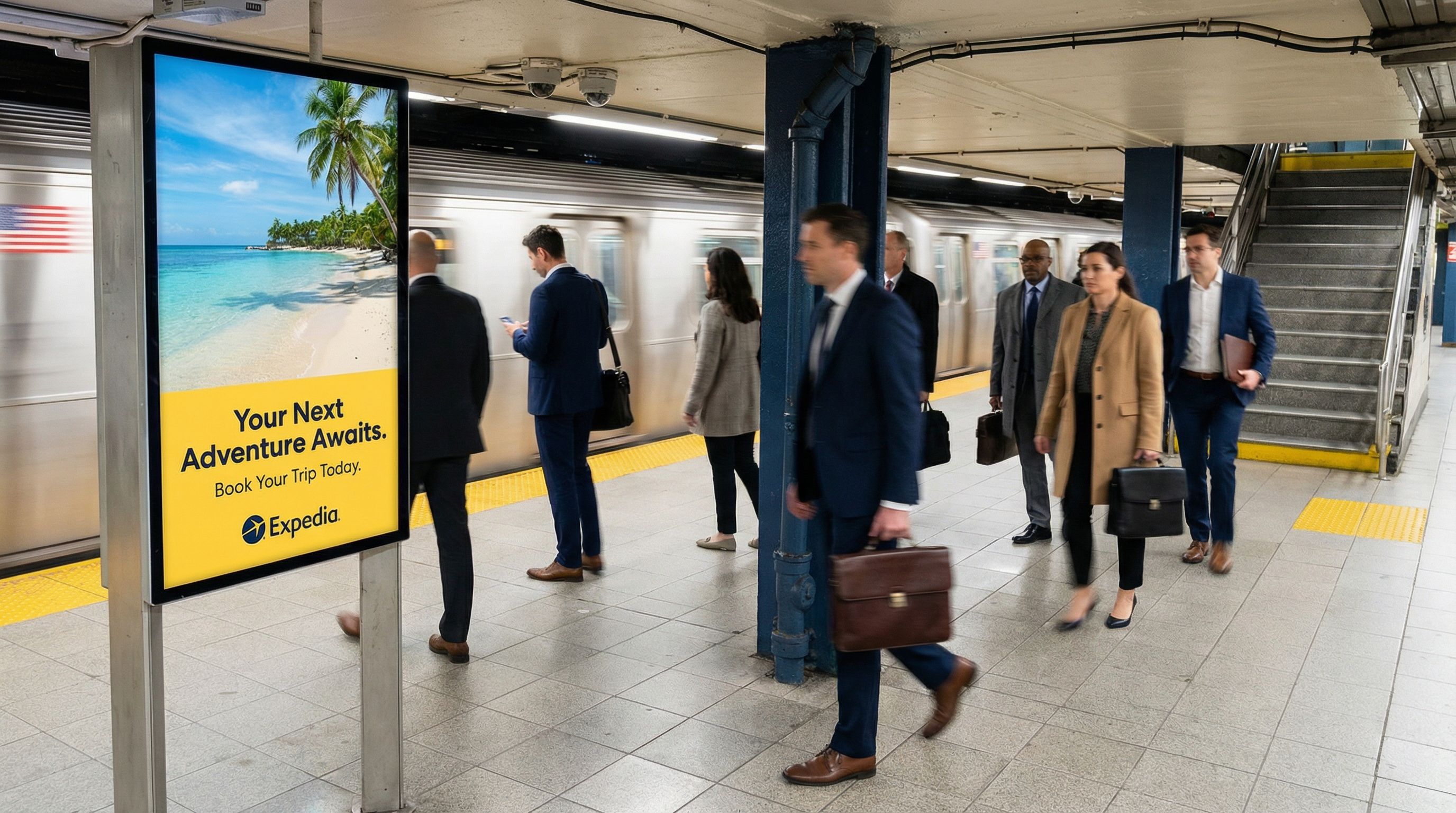
Rail Advertising in the U.S.
Why Rail Media Works
1. High-Dwell Environments = Higher Attention
Unlike roadside formats where exposure is measured in seconds, rail commuters often spend minutes on platforms, waiting for trains, or standing in highly visible concourse areas.
This extended dwell time leads to: Better message absorption, Higher recall, Increased likelihood of action, Rail environments are among the most attention-rich settings in OOH.
2. Massive Daily Audience Reach
Train stations and rail corridors reach: City workers, Students, Professionals, Families, Tourism traffic, Daily suburban commuters.
With millions of weekly trips across rail networks, rail billboards provide consistent, high-frequency exposure to a broad demographic mix.
3. Ideal for Both Local and National Campaigns
Rail media supports a wide range of objectives: Brand awareness, Local store marketing, Product launches, Recruitment, Event promotions, Tourism campaigns, Government and public service messaging
Whether you’re targeting a suburb, an entire rail line, or multiple city networks, rail offers unmatched coverage.
4. Close-Range, Eye-Level Visibility
Rail advertising appears in environments where audiences stand still, face forward, and actively observe their surroundings.
This makes it perfect for: Detailed creative, Offers and promotions, QR codes, Multi-panel storytelling, Sequential messaging.
Few OOH formats allow for this level of immersive audience engagement.
5. Powerful Frequency Through Daily Routine
Commuters typically follow the same travel patterns every day—passing the same ads at the same times.
This habitual repetition strengthens: Brand familiarity, Message retention, Campaign effectiveness.
Rail media becomes part of the daily journey.

How do I set up artwork forRail Advertising ?
Contact us for more information on the artwork setup requirements
Contact us
U.S. Rail Advertising Insights
- Commuter Engagement: Studies indicate that train exteriors have equal, if not better, visibility than buses in urban cores, making them effective for advertising campaigns.
- Diverse Audience: Rail systems in cities like New York, Chicago, and Washington, D.C., serve millions daily, offering access to a broad demographic.
- Innovative Campaigns: Brands have utilized full-train wraps and station dominations to create immersive advertising experiences.